
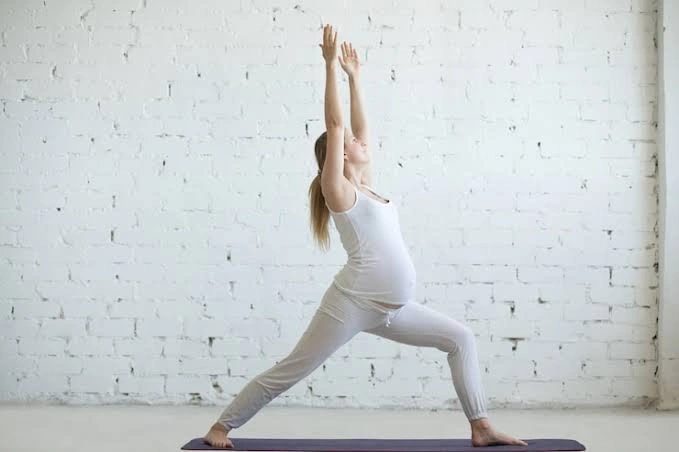
Talk to your doctor. Not next week. Today. Some women should not exercise at all during pregnancy. Your doctor knows your history. They will tell you if yoga is safe for you. This is not medical advice. This is information. You are responsible for your own body.
Now let us talk about pregnancy yoga poses for beginners.
What happens to your body when you are pregnant?

Everything changes.
Your back hurts. Your hips hurt. Your feet look like balloons. You cannot sleep even though you are exhausted. Your mind races at 3 AM. Will the baby be okay? Will labor hurt? Can I actually do this? Your joints get loose. There is a hormone called relaxin. It makes everything soft. This helps the baby come out. But it also makes you more likely to get injured. You cannot stretch the same way you used to.
Your center of gravity shifts. Your belly grows forward. Your back arches to compensate. This causes lower back pain. Almost every pregnant woman gets it. Your heart works harder. It pumps more blood. Your lungs work harder too. You get out of breath just walking up stairs. Yoga helps with all of this. But you have to do it right.
Read Also: Postpartum Recovery Checklist After Birth
Why yoga works for pregnant women?
I will tell you something honest. Yoga does not make labor painless. Nothing does that. But yoga makes labor more manageable. The breathing you learn? You use that during contractions. The hip opening poses? They help the baby move down. The relaxation poses? They help you rest when you cannot sleep.
Women who do yoga report less back pain. Less anxiety. Better sleep. Shorter labors sometimes. But here is what really matters. Yoga gives you time. Time to connect with your baby. Time to breathe. Time to slow down.
Pregnancy moves fast. Everything is about appointments and ultrasounds and baby showers. Yoga forces you to stop. Just for a few minutes. You focus on your breath. You focus on your body. You stop focusing on your fears. That alone is worth it.
The rules you must follow
These are not suggestions.
Do not lie flat on your back after 20 weeks.
Your baby gets heavy. When you lie flat, that weight presses on a major blood vessel. Blood flow to your heart decreases. You feel dizzy. Your baby gets less oxygen. Modify everything. Put pillows under your back. Lie on your side. Prop yourself up.
Do not push yourself.
You are not training for a marathon. You are growing a human. Some days you feel strong. Some days you feel weak. Honor how you feel. If a pose hurts, stop. If you feel dizzy, sit down. If you cannot breathe properly, rest.
Do not hold your breath.
Your baby needs oxygen. Keep breathing. Slow and deep. Through your nose.
Drink water.
Pregnancy makes you dehydrated faster. Keep water near your mat. Sip between poses.
Do not overstretch.
Remember relaxin? That hormone makes your joints loose. You can stretch further than before. But that is dangerous. You can injure yourself without feeling it. Stop before you feel the stretch. Go only 70 percent of your range.
Listen to your body.
This is the most important rule. Your body knows what it needs. Trust it.
What you actually need?
You do not need fancy stuff.
- A yoga mat. Or a carpet. Or a thick blanket.
- Two pillows. One for your knees. One for your head.
- A chair. Something stable. Not a rolling office chair.
- Comfortable clothes. Stretchy pants. Loose top. Nothing tight on your belly.
- A wall. For support.
- Water.
- That is it.
The poses
I will give you ten poses. Start with three. Add more as you get comfortable.
Pose 1: Cat and Cow
- This warms up your back. It relieves pain. It also helps your baby move into a better position.
- Get on your hands and knees.
- Hands under shoulders. Knees under hips. Back flat like a table.
- Look at the floor. Keep your neck long.
- Breathe in. Drop your belly down. Lift your chest. Lift your tailbone. Look slightly forward. That is cow.
- Breathe out. Round your back up. Tuck your chin. Tuck your tailbone. That is cat.
- Move slow. Match each movement to your breath.
- Do this ten times.
Safe for all trimesters.
If your wrists hurt: Make fists. Put your knuckles on the floor. Less pressure on your wrists.
Pose 2: Wide Leg Forward Bend
- This stretches your hips. Your lower back. It calms your nervous system.
- Stand with feet wide apart. Wider than your hips. Toes pointing slightly outward.
- Breathe in. Lift your arms up.
- Breathe out. Fold forward from your hips. Keep your back straight. Do not round it.
- Place your hands on the floor. If you cannot reach, put them on your thighs. Or on a chair. Or on blocks.
- Let your head hang. Relax your neck completely.
- Breathe. Feel the stretch.
- Hold for thirty seconds to one minute.
Safe for all trimesters. In the third trimester, take a wider stance. More room for your belly.
If you feel dizzy: Do not fold all the way down. Bend slightly. Rest your hands on a chair.
Pose 3: Butterfly
- This opens your hips. It prepares your pelvis for labor. It helps with digestion too.
- Sit on the floor.
- Bend your knees. Bring your feet together. Soles touching. Let your knees drop to the sides. Like butterfly wings.
- Hold your feet with your hands.
- Sit up tall. Back straight.
- Press your knees gently toward the floor. Do not force. Let gravity work.
- Rock your knees up and down. Like a butterfly flapping.
- Breathe. Feel your inner thighs stretch.
- Hold for one to two minutes.
Safe for all trimesters.
If your hips are tight: Sit on a pillow. This makes it easier.
Pose 4: Side Lying Relaxation
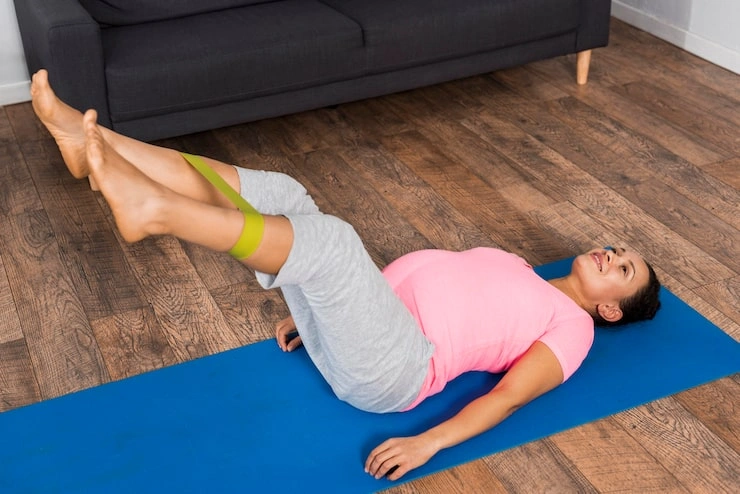
- This is your resting pose. It calms everything. It also improves blood flow to your baby.
- Lie on your left side. Left is best. It improves circulation to your heart and baby.
- Bend your knees slightly. Stack your hips and shoulders.
- Pillow under your head. Pillow between your knees. This keeps your hips aligned. Reduces back pain.
- Lower arm under your head. Upper arm on your thigh or on a pillow.
- Close your eyes.
- Breathe slow and deep.
- Imagine your baby floating safely inside you.
- Stay here for five to ten minutes.
Safe for all trimesters. Best resting pose for the third trimester.
You can do either side. Left is preferred. Right is fine if left is uncomfortable.
You May Also Like: Sleeping Position During Pregnancy First 3 Months
Pose 5: Wall Supported Squat
- This strengthens your legs. Opens your pelvis. Helps the baby move down. Women use this during labor.
- Stand with your back against a wall.
- Walk your feet forward about one foot. Feet hip width apart.
- Slide down the wall. Bend your knees. Lower your hips. Thighs parallel to the floor.
- Press your back flat against the wall.
- Keep your weight in your heels. Do not let your knees go past your toes.
- Hands on your thighs. Or out in front for balance.
- Breathe. Feel your legs working. Your pelvis opening.
- Hold for thirty to sixty seconds.
Safe for all trimesters. In the third trimester, take a wider stance.
If your knees hurt: Do not go as low. Bend slightly. If you feel unbalanced, hold onto a chair.
Pose 6: Pelvic Tilt
This strengthens your lower back. Relieves tailbone pain. Very helpful in the second and third pregnancy yoga poses for beginners.
- Stand with your back against a wall.
- Feet hip width apart. Knees slightly bent.
- Press your lower back flat against the wall. Tilt your pelvis forward. Your back touches the wall.
- Hold for a few seconds. Then relax. Let your back come away from the wall.
- Move slowly. Match each tilt to your breath.
- Do this ten times.
Safe for all trimesters.
You can do this lying on your side too. Tilt your pelvis forward and back with knees bent.
Pose 7: Chest Opener
- Your chest gets tight when you are pregnant.
- Your breasts get heavier. You hunch forward because your belly is heavy. Your shoulders round.
- This pose opens your chest. Helps you breathe better.
- Sit cross legged on the floor. Or on a chair. Back straight.
- Place your hands behind your back. Interlace your fingers. If you cannot reach, hold a towel.
- Gently pull your hands away from your back.
- Lift your chest toward the ceiling. Look slightly up.
- Keep your shoulders down. Do not let them creep up toward your ears.
- Breathe slow. Feel your chest open. Your lungs expand.
- Hold for thirty to sixty seconds.
Safe for all trimesters.
If your hands do not reach: Hold opposite elbows behind your back instead.
Pose 8: Child's Pose
- This is a resting pose. It stretches your back. Helps you relax deeply.
- Kneel on the floor. Sit back on your heels. Knees together.
- Slowly fold forward. Lower your forehead to the floor.
- Arms alongside your body. Palms facing up.
- Breathe. Feel your back stretch. Your hips relax.
- Hold for one to two minutes.
Safe for first and second trimesters only.
Do not do this in the third trimester. Your belly is too big. It puts pressure on your baby.
Third trimester modification: Do the side lying relaxation instead. Same rest benefits. No pressure on your belly.
Pose 9: Ankle to Knee Stretch
This opens your hips. Stretches your outer thighs. Helps with sciatica. Sciatica is common in pregnancy. It causes pain in your buttocks and down your leg.
- Sit on the floor.
- Bend your left knee. Place your left foot on the floor.
- Bend your right knee. Place your right ankle on top of your left knee. Your right knee points to the side.
- Sit up tall. Back straight.
- You will feel a stretch in your right hip. And your outer thigh.
- To go deeper, gently press your right knee down.
- Breathe. Stay for one minute.
- Switch sides. Do the other leg.
Safe for all trimesters.
If you cannot cross your ankle: Cross your foot instead. Sit on a pillow if it helps.
Pose 10: Breathing Practice
- This is not a physical pose. But it is the most important thing you will learn.
- Sit comfortably. On the floor. Or on a chair. Back straight.
- Place your hands on your belly.
- Breathe in through your nose. Feel your belly expand. Like a balloon.
- Breathe out through your nose. Feel your belly deflate.
- Make each breath longer than the last.
- Breathe in for four counts. Breathe out for six counts.
- The longer exhale calms your nervous system.
- Practice this for five minutes every day.
Why this matters:
- You will use this breathing during labor.
- It will help you stay calm. It will help you manage pain. It gives your baby more oxygen right now.
- Practice now. So it becomes automatic later.
Read: Iron Rich Foods During Pregnancy
Poses you must avoid
Not all yoga is safe.
Some poses are dangerous for you and your baby.
Do not lie flat on your back for more than two minutes.
After 20 weeks, this compresses your vena cava. That is the major blood vessel that returns blood to your heart. Compression makes you dizzy. Your baby gets less oxygen. Always modify.
Do not do deep backbends.
Poses like wheel pose. Upward facing dog. These stretch your belly too much. They strain your abdominal muscles. Can cause diastasis recti. That is when your stomach muscles separate.
Do not do deep twists.
Seated spinal twist. Any pose that twists your abdomen. This compresses your baby. Reduces blood flow to your uterus. If you want to twist, only twist from your shoulders. Keep your hips facing forward.
Do not do inversions.
Headstands. Shoulder stands. Handstands. Any pose where your head is lower than your heart. There is not enough research on safety. Avoid them.
Do not bounce or jump.
Your joints are loose. Relaxin makes them unstable. Bouncing increases injury risk.
Do not lie on your belly.
This is obvious after the first trimester. Do not put pressure on your baby.
Do not do hot yoga.
High temperatures dehydrate you. They raise your baby's body temperature. Dangerous.
How often should you practice?
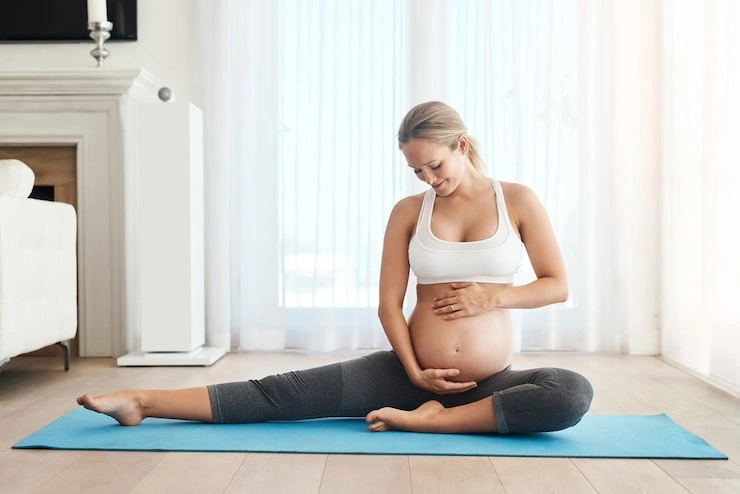
Consistency beats intensity. You do not need to do an hour every day. But you should do something every day.
Brand new beginner: Fifteen minutes in the morning. Pick three poses. Do each for one minute. End with five minutes of breathing. Short enough that you cannot skip it.
Getting comfortable: Thirty minutes every other day. Pick all ten poses. Move slow. End with ten minutes of breathing.
Exhausted days: Just do the breathing. And the side lying pose. That is enough. That is self care.
- Some days you feel energetic. Do all ten poses.
- Some days you feel drained. Just breathe.
- Listen to your body.
Fit yoga into your daily life
You do not need special time.
- Cat and cow when you wake up. In bed. Before your feet touch the floor.
- Pelvic tilt while you brush your teeth. Stand against the bathroom wall.
- Butterfly pose while watching TV. Sit on the floor instead of the couch.
- Wide leg forward bend when your back hurts during the day. Instant relief.
- Breathing practice when you feel anxious. Five deep breaths. Changes everything.
- Side lying relaxation before bed. Helps you fall asleep.
Stop immediately if this happens
Do not push through.
- Bleeding. Any vaginal bleeding. Call your doctor.
- Pain. Any pain during exercise. Back pain. Pelvic pain. Abdominal pain.
- Dizziness. You are not getting enough oxygen.
- Shortness of breath. You should be able to talk. If you cannot, stop.
- Contractions. Rhythmic tightening in your belly.
- Fluid leaking. Your water might have broken.
- Less baby movement. Your baby should move normally during and after exercise.
- Chest pain. This is always an emergency.
One woman's story
- My friend Sarah did yoga during her pregnancy.
- She started at 14 weeks. She had terrible back pain. She could not sleep. She was anxious all the time.
- She started with three poses. Cat and cow. Pelvic tilt. Side lying relaxation.
- Within a week, her back pain improved. Within two weeks, she was sleeping better.
- By 30 weeks, she was doing all ten poses. She felt strong. She felt calm.
- Her labor was twelve hours. She used the breathing techniques through every contraction. The nurses were impressed. She was focused. She was in control.
- She said yoga did not make labor painless. But it made it manageable. She felt prepared.
- That is what yoga gives you. Preparation. Strength. Calm.
Conclusion
You have everything you need now. Ten poses, safety rules, and a clear path forward. Start small. Pick three poses and do them today. Tomorrow add one more. Within a week, you will know them all. Some days will be hard. You will feel tired and want to skip. Do not skip. Just do the breathing and the side lying pose. That takes five minutes. Those minutes matter. They tell your body and your baby that you care. The poses themselves are not the point. The point is showing up, slowing down, and breathing when everything feels overwhelming. Pregnancy is hard. Labor is harder. Yoga prepares you for both. You are stronger than you think. Trust your body. Keep breathing. Keep moving. You can do this.
Other Articles

Positive Discipline Strategies For Preschoolers
50 Popular Gujarati Surnames Or Last Names With Meanings