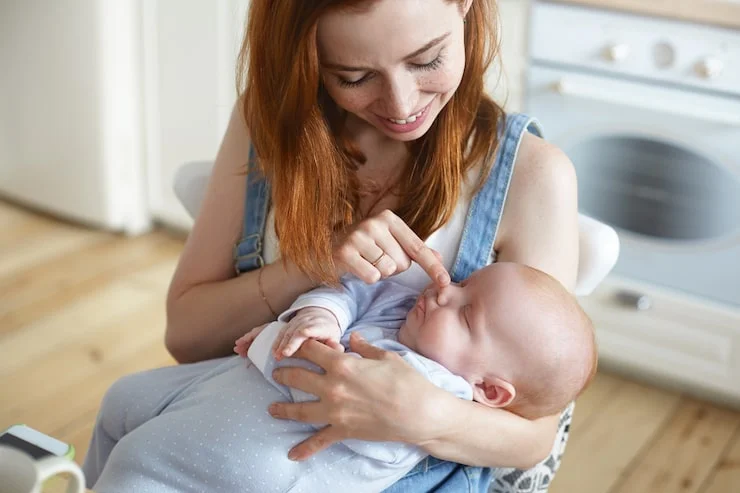


What is positive parenting for toddlers? Positive parenting is a way of raising young children that builds on warmth, clear communication, and respect for your child's developing abilities. It focuses on guiding behavior through connection rather than punishment, teaching toddlers what to do instead of only what not to do .
If you are raising a toddler, you already know the truth: some days feel like a constant battle over socks, snacks, and the blue cup that is somehow the wrong blue cup. The crying is loud. The frustration is real. And in those moments, it is easy to fall back on yelling, threats, or giving in just to make it stop.
Positive parenting offers a different path. It is not about being permissive or letting your child run the house. It is about building a relationship strong enough that your toddler actually wants to cooperate with you. Research shows this approach leads to fewer behavior problems, better emotional regulation, and stronger parent-child bonds .
This guide walks you through what positive parenting techniques for toddlers looks like in real life with a toddler. No jargon. No judgment. Just practical techniques you can use today.
Why Positive Parenting Works for Toddlers?

Read Also: Bedtime Routine For 5 Year Old
How does a toddler's brain develop?
A toddler's brain is under construction. The parts responsible for logic, impulse control, and emotional regulation are not finished yet. In fact, they will not be fully developed until your child reaches their mid-twenties .
What does this mean in practice? When your two-year-old melts down because you cut their sandwich into triangles instead of squares, they are not being manipulative. Their brain literally cannot process disappointment the way an adult can. The emotional center is firing at full volume while the reasoning center is barely online.
This is why punishment-heavy approaches often backfire. A toddler who is hit, shamed, or isolated for having a tantrum does not learn better behavior. They learn that big feelings are dangerous and that the adults they depend on cannot be trusted with those feelings .
Positive parenting works because it meets the toddler where they are. It provides external regulation while their internal regulation is still forming. Over time, repeated experiences of calm guidance literally shape the developing brain to handle stress and frustration more effectively .
What does the research say about positive parenting?
The evidence base for positive parenting is substantial. A review of studies found that positive parenting is linked to fewer externalizing behaviors, better cognitive functioning, and more positive emotional responses in children . The UNICEF report on discipline highlights multiple evidence-based programs, including Triple P and Incredible Years, that teach positive parenting skills with demonstrated results .
Zero to Three, a leading early childhood organization, emphasizes that what happens in the first three years has a lasting impact on cognitive and emotional growth . A nurturing home environment, predictable routines, and responsive caregiving are not just "nice to have" – they are foundational for lifelong well-being.
Core Positive Parenting Techniques for Toddlers
1. How do you build connection before correction?
The single most important principle in positive parenting is this: connection comes first. Dr. Laura Markham, clinical psychologist and author of "Peaceful Parent, Happy Kids," explains that a strong parent-child bond is what makes children actually want to cooperate .
For toddlers, connection looks like:
-
Getting down to their level. Crouch or sit so you are eye-to-eye when you speak to them. This simple physical adjustment changes the entire dynamic .
-
Narrating your day together. Talk about what you are doing, what they are doing, what you see. This builds language and shows you are paying attention .
-
Brief, frequent moments of warmth. You do not need hours of one-on-one time. A smile, a gentle touch on the head, a quick hug as you pass by – these small deposits build trust over time .
-
Special playtime. Even 10-20 minutes of child-led play each day, where you follow their lead without directing, strengthens your bond significantly .
When connection is strong, discipline becomes easier. Your toddler wants to please you because they feel secure in your love. That foundation does not eliminate tantrums, but it makes them shorter and less intense.
2. How do you set limits without punishment?
Toddlers need limits. Without them, they feel adrift and unsafe. The key is setting limits in a way that teaches rather than punishes.
Focus on what to do, not what to stop. Instead of "Don't jump on the couch," try "We jump on the floor" . Instead of "Stop grabbing," say "Use gentle hands" . Toddlers process positive instructions more easily than prohibitions. When you tell them what not to do, they still have to figure out what you actually want. Save them the mental work.
Offer limited choices. Control is the central issue in most toddler conflicts. They want it. You have it. Offering two acceptable options gives them a sense of autonomy without letting them run the show . "Do you want to brush your teeth now or after we read a book?" Both outcomes work for you. Your toddler feels powerful because they chose.
Make rules simple and few. Three or four clear rules are enough for a toddler . Keep them positive: "We use gentle hands." "We stay at the table while eating." "We put toys away before getting new ones." Repeat them consistently. All caregivers need to follow the same rules, or your toddler will learn to play you against each other .
Use natural and logical consequences. A natural consequence happens on its own: if you throw your toy, it breaks. A logical consequence is something you create that directly connects to the behavior: if you throw the toy, the toy goes away for a while . The key is that the consequence teaches the lesson, not inflicts pain.
3. How do you handle tantrums with positive parenting?
Tantrums are not misbehavior. They are a toddler's nervous system overflowing because they lack the language and brain development to cope with big feelings .
Stay calm. This is the hardest part. Your toddler's meltdown triggers your own stress response. But when you react with anger or panic, you add fuel to the fire. When you stay calm, you become a safe anchor. Your calm nervous system helps regulate theirs .
Validate the feeling, hold the limit. "You are so mad that we have to leave the park. It is okay to feel mad. It is not okay to hit me." This sentence does two things: it acknowledges their emotion as valid while keeping the boundary firm .
Do the unexpected. When your toddler is mid-meltdown, sometimes the best move is to break the pattern. A big bear hug. A silly song. Running around the room making animal noises. Zero to Three calls this "doing the unexpected" – it interrupts the escalation and often shifts the mood entirely .
Keep them safe, then wait. If your toddler is thrashing or hitting, gently move them to a safe space or hold them if necessary. Do not try to reason with a dysregulated brain. Once the storm passes, offer comfort. The lesson comes later, when they are calm and can actually hear you.
4. How do you encourage the behavior you want?
Toddlers are little attention magnets. They will repeat whatever gets a reaction – positive or negative. Positive parenting intentionally shifts the balance toward noticing and praising the behavior you want to see more of.
Praise specifically and immediately. "You sat and ate your lunch by yourself – well done!" tells your toddler exactly what they did right . Vague praise like "Good job" does not give them useful information. Specific praise does.
Praise effort, not just outcomes. When your toddler tries to put on their shoes and gets them on the wrong feet, they still deserve recognition for trying. Praising effort keeps them motivated to keep practicing .
Use positive attention proactively. Do not wait for misbehavior to give attention. Catch your toddler being good. Sitting quietly. Playing independently. Sharing a toy. Point it out. This fills their attention tank so they do not need to act out to get refilled .
Avoid backhanded praise. "Great job sharing – why can't you do that more often?" is not praise. It is criticism wrapped in a compliment. It confuses your toddler and undermines the positive message .
You May Also Like: Parenting Tips For Teenagers Checklist
5. How do you manage your own emotions as a parent?
You cannot pour from an empty cup. Positive parenting requires emotional regulation on your part, and that is not always easy when you are exhausted, touched out, and running on cold coffee.
Notice your triggers. What situations make you snap fastest? Whining? Refusal? Being late? Knowing your triggers is the first step to responding instead of reacting .
Name your feelings, even if only to yourself. "I am feeling furious right now." Acknowledging the emotion reduces its intensity. It moves you from being consumed by the feeling to observing it .
Take a pause. When you feel the volcano rising, step away if you can. Even 30 seconds of deep breathing in the bathroom can reset your nervous system. If you cannot leave, count to ten silently. It sounds cliché because it works.
Apologize when you mess up. You will mess up. Every parent does. What matters is what happens next. A genuine apology – "I yelled at you and that was not okay. I was frustrated, but yelling is not how we solve problems" – teaches your child that mistakes are repairable and that respect goes both ways .
6. How do daily routines support positive parenting?
Toddlers thrive on predictability. When they know what comes next, they feel safe. When they feel safe, they are less likely to test limits .
Build consistent routines for meals, naps, and bedtime. A predictable sequence – bath, teeth, book, bed – signals to your toddler's brain that sleep is coming. This reduces bedtime battles significantly .
Use transitions wisely. Toddlers struggle with sudden changes. Give a warning: "We are leaving the park in five minutes. Then we will go home and have lunch." Count down. Sing a cleanup song. Transitions are hard, but they are easier when they are predictable .
Create family rituals. Saturday pancakes. Friday night walks. Sunday video calls with grandparents. These small traditions build identity and belonging. They also give your toddler something to look forward to, which makes cooperation easier in the meantime .
7. What mistakes should you avoid?
Do not overtalk. When your toddler is upset or refusing, a long explanation will not help. An 18-month-old cannot process complex sentences. A three-year-old's attention span is too short to follow your reasoning . Keep it short. "Teeth need brushing. You can brush or I can help."
Do not use "you" statements that attack character. "You are being so difficult" is different from "I do not like it when you throw food." One attacks who they are. The other addresses what they did .
Do not confuse positive parenting with permissiveness. Positive parenting still has limits. It still has consequences. It still says no. The difference is in the how, not the what. You can be warm and firm at the same time. In fact, you need to be both for it to work .
Do not expect perfection. Some days will be a disaster. You will yell. You will threaten. You will bribe with fruit snacks. That is okay. Positive parenting is a direction, not a destination. Tomorrow is another chance.
Frequently Asked Questions
What is the best age to start positive parenting?
You can start from birth. Positive parenting principles – responsive caregiving, warmth, predictable routines – apply at every stage. For toddlers specifically, the techniques become more structured as your child gains mobility and language. Starting early makes the toddler years easier because the foundation is already in place .
Does positive parenting make children spoiled?
No. Research consistently shows that children raised with warm, responsive parenting are more independent, better regulated, and more socially competent – not less . Spoiling comes from a lack of limits, not from warmth. Positive parenting provides both warmth and clear boundaries.
How do I handle public tantrums?
Stay calm, keep your child safe, and do not worry about what strangers think. Most parents have been there. If you can, move your child to a quieter space. If not, crouch down, speak quietly, and wait it out. The goal is to help them regulate, not to perform good parenting for an audience .
What if my partner does not use positive parenting?
Consistency matters, but change takes time. Start with yourself. Model the approach. Share articles or resources that explain why it works. Many parents come around when they see the results – fewer tantrums, more cooperation, and less stress for everyone .
If your toddler's behavior feels unmanageable, if you are having thoughts of harming yourself or your child, or if you feel constantly overwhelmed, reach out. Your pediatrician can connect you with resources, support groups, or therapists who specialize in early childhood. Asking for help is a strength, not a failure .
Conclusion
Positive parenting for toddlers is not a magic trick. It will not stop your two-year-old from melting down when you give them the wrong color cup. What it will do is change how you respond to those moments. Instead of escalating, you de-escalate. Instead of punishing, you teach. Instead of winning a battle, you build a relationship.
The techniques in this guide are simple but not always easy. They require patience you will not always have. They require calm you will sometimes fake until it becomes real. They require showing up, again and again, even on the days when nothing seems to work.
But the payoff is worth it. A toddler who feels connected, understood, and securely attached is a toddler who will cooperate more, tantrum less, and grow into a child who knows how to handle big feelings because you showed them how.
Start with one technique. Connection before correction. Choices instead of commands. Calm instead of chaos. One small shift today can change the entire trajectory of your parenting journey.
Other Articles
50 Popular Gujarati Surnames Or Last Names With Meanings