

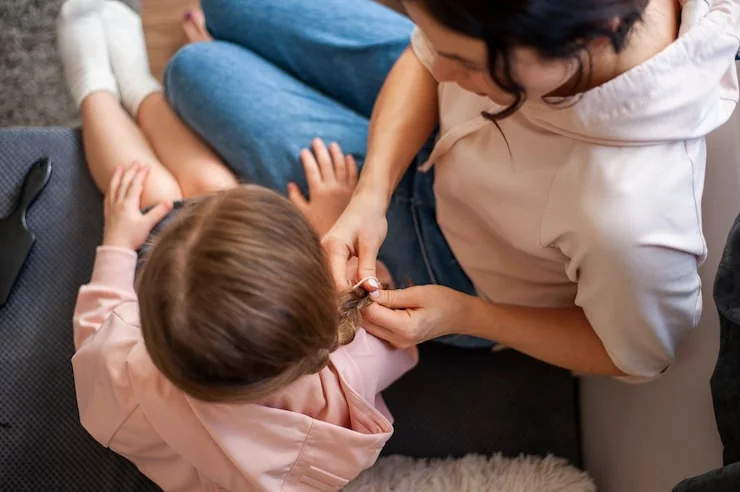
Gentle parenting is a style built on empathy, respect, and clear expectations. It asks parents to coach children through hard feelings instead of punishing them for having those feelings. The goal is not perfection. The goal is to stay calm, explain the "why" behind rules, and follow through with boundaries that keep a child safe and gentle parenting tips for beginners.
If you are new to this approach, the ideas can feel abstract when your toddler is screaming on the kitchen floor. This guide gives you specific, usable tips for the moments that actually happen in a normal day.
What Gentle Parenting Actually Means (and What It Does Not)?

Gentle parenting is often misunderstood as letting children do whatever they want. That is permissive parenting, and it is not the same thing. Cleveland Clinic pediatrician Karen Estrella explains that gentle parenting requires parents to understand the developmental stage their child is in and to set consistent limits . A toddler learns through cause and consequence. If they throw food, they do not get dessert. If they help clean up, they get a smile and a high-five. The warmth is in how you deliver the consequence, not in removing the consequence altogether.
The approach rests on four ideas: empathy for the child's feelings, respect for the child as a person, clear expectations stated ahead of time, and consistent follow-through . When you practice these four things, you are doing gentle parenting. You do not need special scripts or a perfect tone every time.
Start with One Habit: Set Expectations Before Trouble Starts
Most difficult moments with young children happen because the child did not know what was coming. A trip to the grocery store, a transition from play to bedtime, or a visit to a relative's house all involve a change the child did not plan for.
Before the event, tell your child what will happen. Be specific and brief. "We are going to the store. You will ride in the cart. I will buy food. Then we go home." For a child who cannot read a clock, a visual calendar or a simple countdown helps. Dr. Estrella recommends a visual schedule for routines like getting dressed in the morning, plus an alarm that signals when playtime ends .
This one habit prevents a large share of power struggles. A child who knows what is next has less reason to fight the unknown.
Read Also: Effective Discipline Strategies For Preschoolers
Stay Calm When Your Child Is Not
This is the hardest part. When your child is yelling or crying, your own nervous system reacts. You feel frustrated, embarrassed, or angry. Gentle parenting does not ask you to feel nothing. It asks you to pause before you act.
A useful mental shift comes from the Calm blog: tell yourself, "They're having a hard time, not giving me a hard time" . That sentence does not excuse the behavior. It reframes the moment so you can respond instead of react.
Your child is watching how you handle conflict. Dr. Estrella puts it plainly: "The more they see you respond calmly, the more likely they are to develop those same skills" . If you lose your cool, repair it. Say, "I got frustrated and I raised my voice. That was not okay. I am sorry. Let's try again." Repair teaches more than pretending nothing happened.
Validate the Feeling, Hold the Boundary
Beginners often struggle with this balance. They either dismiss the feeling ("You're fine, stop crying") or give in to make the crying stop. Gentle parenting does neither.
Here is what it looks like in practice. Your child wants ice cream before dinner and starts to cry. You say, "I see you're really disappointed. You wanted ice cream, and I said no. That is frustrating." Then you hold the line: "We will have ice cream after dinner." The feeling is allowed. The boundary stays.
Calm's guide offers the same structure: acknowledge the emotion, then restate the limit . The child learns two things at once. Feelings are safe to express. Limits do not move just because feelings are loud.
Explain the Reason, Not Just the Rule
Young children cooperate more when they understand why a rule exists. Instead of "Don't touch the stove," say, "The stove is hot. It can hurt your hand. Keep your hand away so you stay safe" . The explanation gives the child a cause-and-effect lesson they can carry into the gentle parenting tips for beginners.
This does not mean you must negotiate every instruction. Safety comes first. If your child is about to touch a hot pan, you move them immediately. The explanation can come right after, once the danger is gone. You can still say, "That was hot. It would have hurt you. I moved you to keep you safe."
Use Consequences That Teach, Not Punish
Gentle parenting discipline is about teaching, not making a child suffer for a mistake. When your child spills juice because they were playing with the cup, the natural consequence is cleaning it up together. When siblings argue over a toy, you can ask, "You both want the same toy. How can we solve this so each of you gets a turn?" .
This problem-solving step takes longer than taking the toy away. It also builds the skill your child needs for the next conflict. Over time, they learn to negotiate and compromise without an adult stepping in every time.
Build the Connection During Calm Moments

A strong relationship makes hard moments easier. When your child trusts that you are on their side, they are more likely to calm down when you help them through a tantrum . Connection does not require elaborate activities. Reading a book together, playing their favorite game for ten minutes, or sitting and talking without a phone in your hand all count.
Think of connection like a bank account. Calm, warm moments are deposits. Difficult moments are withdrawals. If the account is full, a withdrawal does not empty it. If the account is empty, every small conflict feels like a crisis.
You May Also Like: Gentle Parenting Techniques For Strong Willed Toddlers
Be Patient with Yourself
You will not do this perfectly. No one does. Dr. Estrella notes that gentle parenting sounds good in theory but is challenging in practice, especially when you are angry and need to keep yourself in check . Many adults are trying to parent differently from how they were raised, which means unlearning old habits while under stress.
When a moment goes badly, reflect on it without shame. Ask yourself what made it hard. Were you tired? Was the expectation unclear? Did you skip the warning before a transition? Then try again next time. You can even talk it through with your child in simple words: "I had a hard time staying calm this morning. I am going to try again." That conversation models the exact skill you are teaching.
Frequently Asked Questions
Is gentle parenting the same as permissive parenting?
No. Permissive parenting avoids limits. Gentle parenting keeps limits firm while responding to feelings with empathy and respect.
What do I do when my child hits or bites?
Stop the behavior immediately and calmly. Say, "I will not let you hit. Hitting hurts." Then address the feeling underneath: "You were angry because I said no. It is okay to be angry. It is not okay to hit. Next time, use your words or come get me." Stay close until the child is calm enough to try again.
How long does it take to see results?
Gentle parenting is a long-term approach. Children learn emotional regulation over years, not days. The goal is progress, not perfection. Consistency matters more than any single moment .
Do I need special training to do this?
No. The core skills are setting expectations, staying calm, validating feelings, holding boundaries, and repairing when things go wrong. You can start with one habit this week and add another when the first feels natural.
Conclusion
Start smaller than you think you need to. Pick one tip from this article—setting expectations before a transition, or using the "having a hard time" reframe—and practice it for a week. Gentle parenting is not a performance you put on for other parents. It is a set of habits you build slowly, with your child, through ordinary days and messy moments. The calm you practice today becomes the calm your child carries into tomorrow.
Other Articles
50 Popular Gujarati Surnames Or Last Names With Meanings