
Most babies learn to roll from their belly to their back around six months of age. This is often the first direction they master. The motion feels like a small victory for them and a big relief for you. It also marks the start of a new level of movement. Before this, your baby needed you to change their position. After this, they can begin to shift their own body in space. That shift changes how they explore the floor, how they play, and how closely you need to watch them during awake time.
The exact age is not a single date on a calendar. Some babies flip from belly to back closer to four months. Others take their time and get there closer to seven months. Both paths can be normal. What matters more than the number is the pattern you see over time. Your baby should be gaining strength, showing more control over their head and arms, and slowly figuring out how to move their weight from one side to the other. Rolling is not a trick they learn overnight. It is the result of many small skills coming together, and those skills build through everyday floor play .
Why Belly to Back Usually Comes First?

A baby on their belly has a small advantage. Their arms are already underneath them, and they can push against the floor. That push gives them the leverage to tip toward their back. The motion is still clumsy at first. They may rock, pause, and suddenly flop over with a surprised look. That surprise is normal. They did not plan the full roll. Their body found the way before their mind caught up. Over time, the flop becomes smoother and more deliberate. They learn that pushing up and turning their head leads to a change in view, and they start to repeat the motion on purpose .
Rolling from back to belly is usually harder and comes later. On their back, a baby cannot push up with their arms the same way. They have to use their legs and trunk to turn their body against gravity. That takes more coordination and more strength. So if your baby has mastered belly to back but still seems stuck on their back, that is not a problem. It is the usual order of things.
Read Also: How To Help A Baby With Hiccups
Signs Your Baby Is Getting Ready
Before the first full roll, you will likely see smaller movements that point toward it. During tummy time, your baby may push up on their hands and lift their chest. They may rock side to side as if testing their balance. Some babies make a swimming motion with their arms and legs while their belly stays on the floor. Others turn their head and reach toward a toy placed just to one side. These are not random wiggles. They are signs that the neck, shoulders, back, and core muscles are working together .
You might also notice your baby rolling onto their side and then stopping. That half-roll is a preview. They are learning how to shift their weight and how to bring their body back if they do not like the new position. Some babies roll onto their side during a diaper change or while reaching for something. Others do it mostly during floor play. Where it happens matters less than the fact that it is happening. Side rolling shows that the coordination for a full roll is taking shape .
How Tummy Time Fits In?
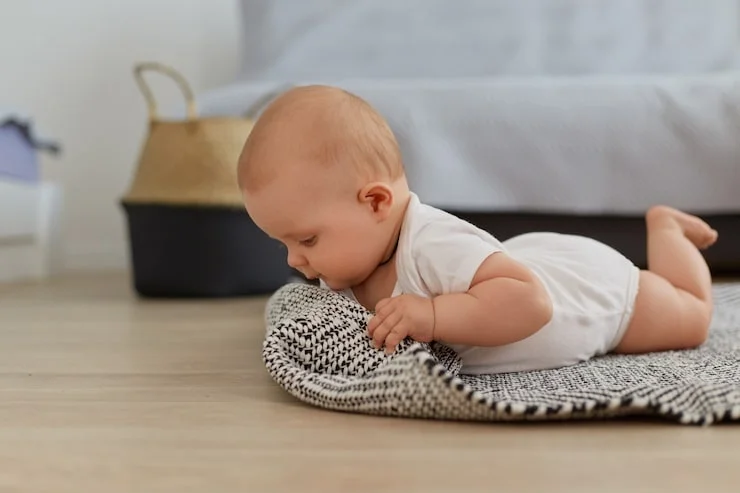
Tummy time is the main practice your baby gets for rolling. When they lie on their belly while awake, they have to use their arms to push up and their neck to lift their head. That effort strengthens the same muscles that later carry them through the roll. A baby who spends little time on their belly may take longer to build that strength. A baby who gets short, regular sessions on the floor has more chances to practice the push, the turn, and the weight shift that lead to rolling .
The American Academy of Pediatrics recommends starting tummy time early, even in the newborn stage. You can begin with a few minutes at a time, several times a day. If your baby protests, that is common. Many babies dislike the position at first because it feels strange and takes effort. You can keep sessions short and stay close. A toy or your face can give them a reason to lift their head. As they get stronger, the protests often fade, and the time on their belly becomes more comfortable .
It also helps to think about where your baby spends their awake time. Swings, bouncers, and car seats have their place, but long stretches in them limit free movement. A baby who is strapped in or reclined cannot practice pushing, turning, or shifting their weight. Floor time on a firm, safe surface gives them the room to experiment. That does not mean you need to avoid containers completely. It means the floor should be a regular part of the day, not an afterthought .
What the Roll Looks Like in Real Life?
The first belly-to-back roll is rarely graceful. Your baby may push up, turn their head, and tip over in a way that looks more like a fall than a planned move. They may cry or look startled. They may also look proud. Both reactions are normal. The important part is that their body completed the motion. With repetition, the roll becomes smoother and more controlled. They learn to tuck an arm, turn their hips, and land on their back without the sudden flop. That control comes from practice, not from teaching .
Some babies roll mostly in one direction at first. They might always go over their right shoulder or always turn their head to the left. That preference is common and not usually a concern. Over time, most babies learn to roll both ways. If your baby only ever rolls to one side and seems unable to use the other side, it is worth mentioning at a checkup. But a mild preference in the early weeks of rolling is not unusual .
When to Check With Your Pediatrician?
Most babies who are not rolling by six months are still within a wide range of normal. Some are focused on other skills, like sitting or reaching. Others are cautious and prefer to observe before they move. Premature babies may reach this milestone later, and their adjusted age is often used when tracking development. A baby who was born early may need a few extra weeks or months to build the same strength .
There are times when a conversation with your pediatrician is wise. If your baby is seven or eight months old and shows no interest in rolling in either direction, that is worth mentioning. If your baby seems very stiff or very floppy when you help them move, or if they consistently use only one side of their body, those are signs to bring up. If your baby had learned to roll and then stopped, that loss of a skill should be checked. These signs do not automatically mean something is wrong, but they are reasons to get a professional opinion.
You May Also Like: How To Take Care Of A Newborn Baby
Keeping Your Baby Safe as They Learn

Once your baby can roll, even a little, your safety habits need to shift. A baby who can roll from belly to back may soon roll off a bed, couch, or changing table. Always keep a hand on your baby during diaper changes and never leave them alone on a high surface. During tummy time, stay close. Use a firm floor mat or a play yard rather than a soft mattress where their face could sink .
Sleep is a separate matter. Babies should always sleep on their backs, even after they learn to roll. If your baby rolls onto their belly during sleep, you do not need to flip them back every time once they can roll both ways. But the start of sleep should still be on the back. The crib should be free of pillows, blankets, and soft toys. Those items are safe for supervised play but not for sleep .
What Comes After Rolling?
Rolling opens the door to other movements. Once your baby can roll from belly to back and back to belly, they can choose their position during play. They may roll to reach a toy, roll to get closer to you, or roll simply because it feels good. That choice is a small taste of independence. It also prepares them for sitting, crawling, and eventually pulling up to stand. The same muscles that carry them through a roll will support them as they learn to sit without help and move across the floor .
You do not need to rush the next milestone. The work of rolling is enough for now. Give your baby time on the floor. Put a few toys within reach but not directly in their hand. Let them get a little frustrated, as long as they are safe and not distressed. That frustration is often what motivates them to push, turn, and try again. Your job is to provide the space, the supervision, and the encouragement. The roll itself is something their body learns through practice, not through a lesson.
When it happens, you will likely see it before you expect it. One day your baby will push up during tummy time, turn their head, and tip over onto their back. They may look shocked. You may cheer. Then they will do it again. And again. Each time, the motion will get a little smoother. That is how the milestone unfolds: not in a single moment, but in a series of small tries that slowly become a skill.
Other Articles
50 Popular Gujarati Surnames Or Last Names With Meanings