

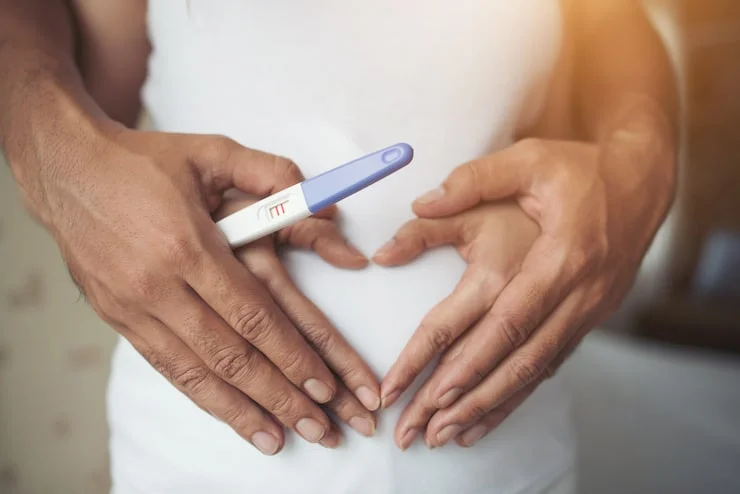
The first trimester of pregnancy brings excitement, questions, and a long list of appointments. Among those appointments, you will likely be offered several tests. Some are routine and happen for every pregnant person. Others are optional and give you information about your prenatal tests during first trimester.
Understanding what these tests are, when they happen, and what they can tell you helps you make choices that feel right for you. This guide walks through each test you might encounter during the first trimester, explained in plain language.
What Happens at Your First Prenatal Visit?

Your first prenatal visit usually happens between weeks 6 and 8 of pregnancy. This visit is longer than most because your doctor needs to learn about your health history, your family history, and your pregnancy so far.
Your doctor will ask about:
-
Your current health conditions, such as diabetes, high blood pressure, or thyroid problems
-
Any medications you take, including over-the-counter drugs and supplements
-
Your past pregnancies and any complications
-
Health conditions that run in your family or your partner's family
A physical exam may include:
-
Checking your weight and blood pressure
-
A pelvic exam to check the size and position of your uterus
-
A Pap test if you are due for one
Your doctor will also talk with you about healthy eating, safe exercise, and habits to avoid during pregnancy. This is a good time to bring up any questions or concerns you have, no matter how small they seem.
Read Also: Healthy Breakfast Ideas For Pregnancy
Routine Tests at Every Prenatal Visit
At each prenatal visit during your first trimester, your care provider will check a few basic things. These simple checks give a picture of your overall health and help catch problems early.
Blood pressure check. High blood pressure during pregnancy can affect both you and your baby. Your doctor will track this number at every visit to notice any changes.
Urine test. Your urine is checked for bacteria, protein, and sugar . Protein in your urine can be an early sign of a condition called preeclampsia. Sugar might point to gestational diabetes. Bacteria could mean a urinary tract infection that needs treatment.
Weight check. Tracking your weight helps your doctor know if you are gaining at a healthy pace for your body and your pregnancy.
Blood Tests in Early Pregnancy
Your first trimester usually includes a set of blood tests. These are done once, often at your first or second prenatal visit. They check for several things that could affect your pregnancy.
Blood type and Rh factor. Everyone has a blood type (A, B, AB, or O) and an Rh factor (positive or negative). If you are Rh-negative and your baby is Rh-positive, your body might make antibodies that attack your baby's blood cells. This is called Rh incompatibility. Your doctor can prevent problems with a treatment called RhoGAM .
Anemia check. Low iron levels are common in pregnancy. A blood test can tell if you need iron supplements.
Immunity check. Your blood is tested for immunity to rubella (German measles). If you are not immune, your doctor will talk with you about avoiding exposure during pregnancy .
Infection screening. You will be tested for several infections that can affect pregnancy, including HIV, hepatitis B, syphilis, and sometimes other sexually transmitted infections . Finding these early means they can be treated to protect both you and your baby.
Thyroid function. Thyroid problems can affect your baby's development. A simple blood test checks how well your thyroid is working.
Depression Screening During Pregnancy
Your care provider may ask you questions about your mood and feelings during your first trimester. Depression is common during pregnancy and after birth. Experts recommend that all pregnant people be screened for depression .
If depression is not treated, it can cause problems during pregnancy and after your baby is born. Your doctor can connect you with support, counseling, or other help if you need it.
Genetic Screening Tests: What They Are
Genetic screening tests tell you the chance that your baby might have certain health conditions. These tests do not give a definite answer. They give a risk estimate, like "1 in 500" or "1 in 100."
Screening tests are optional. You can choose to have them or not. Your doctor will offer them, but the decision is yours .
What screening tests look for:
-
Down syndrome (trisomy 21)
-
Trisomy 18 (Edwards syndrome)
-
Trisomy 13 (Patau syndrome)
-
Some other chromosome conditions
Screening tests are safe. They use a blood sample from your arm or an ultrasound. There is no risk to you or your baby.
First-Trimester Combined Screening
This screening combines a blood test and an ultrasound. It is usually done between weeks 10 and 13 of pregnancy .
The blood test measures two substances in your blood:
-
PAPP-A (pregnancy-associated plasma protein A), a protein made by the placenta
-
Beta-hCG (human chorionic gonadotropin), a hormone made by the placenta
The ultrasound measures the nuchal translucency. This is a small collection of fluid at the back of your baby's neck. Every baby has some fluid there. Babies with certain chromosome conditions tend to have more fluid than usual .
Your doctor puts the blood test results together with the ultrasound measurement and your age to calculate a risk number.
How accurate is this test?
First-trimester combined screening finds Down syndrome in about 82 to 87 out of 100 babies who have it . That means it misses the condition in 13 to 18 out of 100 cases. It also can give a "positive" result when the baby is actually healthy. This is called a false positive.
Cell-Free DNA Screening
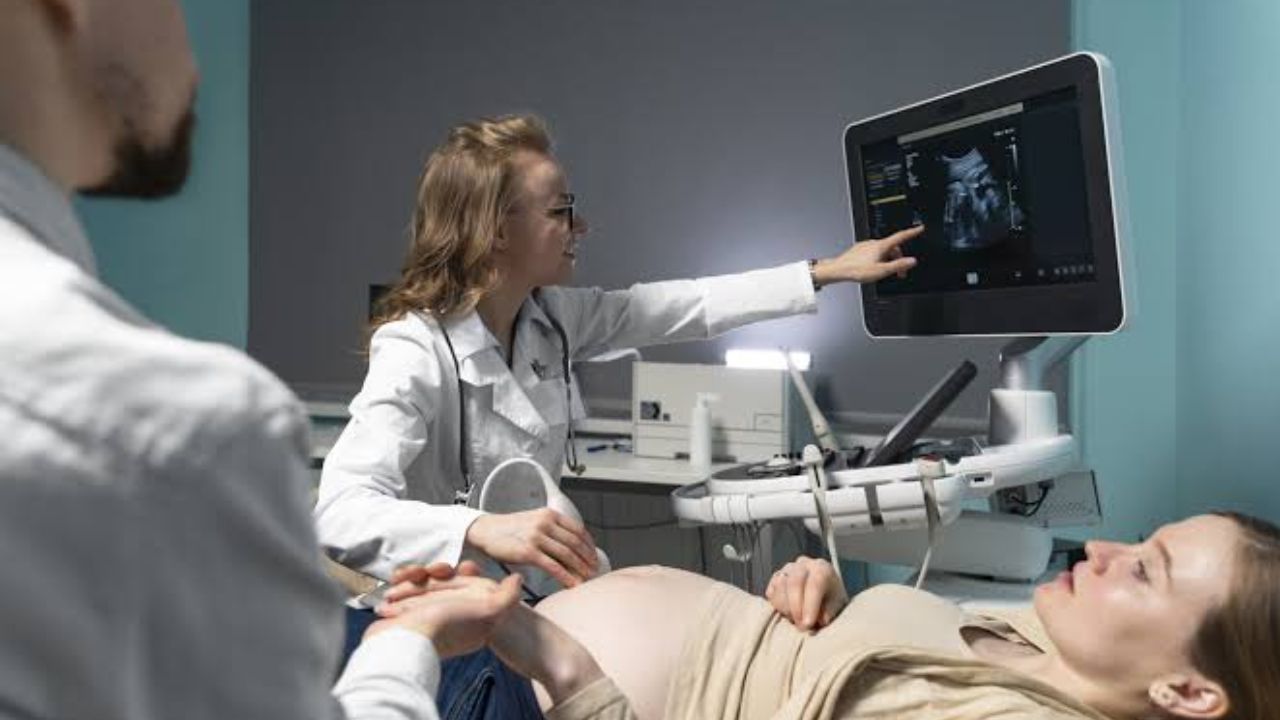
Cell-free DNA screening is also called non-invasive prenatal testing (NIPT). It is a blood test that can be done as early as 9 or 10 weeks of pregnancy .
This test looks at tiny pieces of DNA in your blood. Some of this DNA comes from the placenta, which usually has the same genetic material as your baby. By counting the DNA pieces from different chromosomes, the test can find if there are extra or missing chromosomes .
What it screens for:
-
Down syndrome (trisomy 21)
-
Trisomy 18
-
Trisomy 13
-
Sometimes sex chromosome conditions
How accurate is it?
Cell-free DNA screening is more accurate than the combined screening. It finds Down syndrome in over 99 out of 100 cases . However, it is still a screening test. A "high risk" result does not mean your baby definitely has the condition. You would need a diagnostic test to know for sure.
Important limits to know:
-
The test needs enough of the baby's DNA in your blood. If there is too little, the test may not give a result. This is called a "no call" .
-
Being overweight can lower the amount of the baby's DNA in your blood, which can affect the test.
-
A "high risk" result can sometimes happen even when the baby is prenatal tests during first trimester.
Cell-free DNA screening is not always covered by insurance. You may want to check with your insurance company before having it done.
Diagnostic Tests: CVS and Amniocentesis
Diagnostic tests give a definite answer. They can tell you whether your baby actually has a certain condition. These tests are more accurate than screening, but they come with a small risk.
Chorionic Villus Sampling (CVS)
CVS takes a small sample of tissue from the placenta. This tissue usually has the same genetic material as your baby. The sample can be tested for chromosome problems and some genetic conditions .
When it is done: CVS is usually performed between weeks 11 and 13 of pregnancy .
How it is done: There are two ways. In one method, a thin tube is placed through your vagina and cervix to reach the placenta. In the other, a thin needle goes through your belly into the uterus. Both methods use ultrasound to guide the doctor . The procedure takes only a minute or two to collect the sample, though the whole appointment may take about 30 minutes .
What it can find: CVS can detect chromosome conditions like Down syndrome, trisomy 18, and trisomy 13. It can also find some specific genetic conditions if your family history suggests a risk .
What it cannot find: CVS does not check for neural tube defects like spina bifida. If you have CVS, you will still need a blood test later in pregnancy to screen for those conditions .
The risk: The chance of miscarriage from CVS is low when done by an experienced doctor. Studies suggest the added risk is less than 0.5 percent .
You May Also Like: How To Sleep Better During Pregnancy First Trimester
What If Screening Shows a Problem?
If a screening test shows a "high risk" result, your doctor will talk with you about next steps. You may choose to have CVS to get a definite answer. Or you may decide to wait and have amniocentesis later in pregnancy.
Some people choose not to have any further testing. That is a valid choice. Screening results are just information. How you use that information is up to you.
Making Decisions About Prenatal Testing
Prenatal testing involves choices that only you can make. There is no single right answer.
Questions to ask yourself:
-
Would knowing about a condition before birth help me prepare?
-
Would I consider ending the pregnancy if a serious condition was found?
-
Do I want to know, or would the information cause more worry than comfort?
-
What would I do with the information?
There are no wrong answers. Some people want all the information they can get. Others prefer to wait and see. Both approaches are valid .
Talk with your doctor. Your care provider can explain the tests, the timing, and what results might mean. They can also tell you about the accuracy and the limits of each test.
You can change your mind. You can decide to have a test and then change your mind. You can decline a test at any point. The choice is always yours.
When to Call Your Doctor?
During your first trimester, call your doctor if you have:
- Heavy bleeding
- Severe cramping
- Fever
- Pain when urinating
- Severe vomiting that prevents you from keeping food or fluids down
- Any symptoms that worry you
Trust your instincts. If something feels wrong, call your doctor. It is always better to ask.
Conclusion
The first trimester is a time of many changes and many appointments. The tests offered during this time give you information about your health and your baby's health. Some tests are routine and happen for everyone. Others are optional and give you more detailed information.
You do not have to decide everything at once. Your doctor will guide you through each step. Ask questions. Take your time. And remember that the choices about testing belong to you.
Other Articles

How To Take Care Of A Newborn Baby
50 Popular Gujarati Surnames Or Last Names With Meanings