

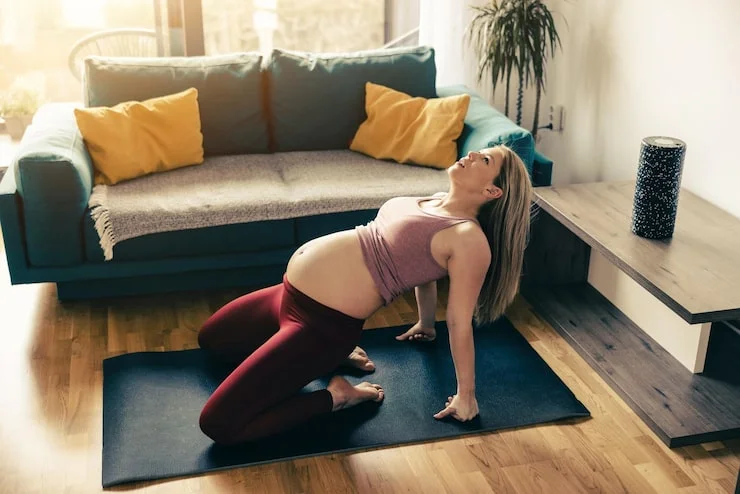
Moving your body during pregnancy is one of the better things you can do for yourself and your baby. It helps with back pain, sleep, energy levels, and even prepares your body for labor. The tricky part is figuring out what to actually do at home, especially when your body feels different every few weeks.
This guide gives you clear exercises you can do in your living room with no equipment. You will also find out when to stop, what to avoid, and how to adjust as your pregnancy moves along. Read the safety section first. It matters more than the workout itself.
Before You Start: The Safety Rules That Come First
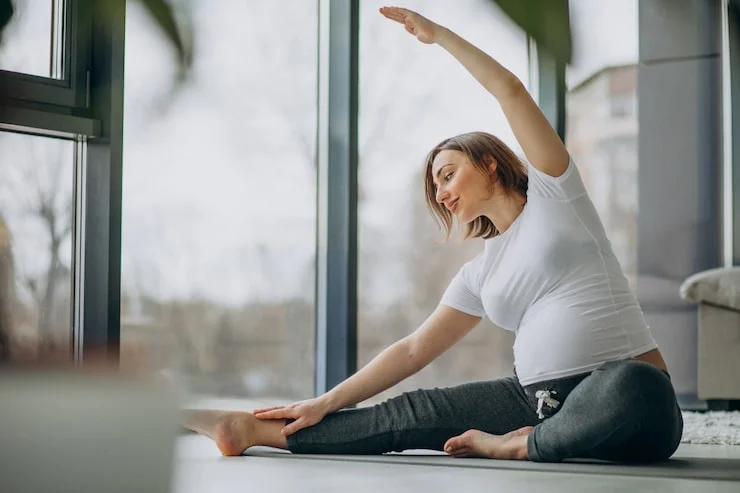
Pregnancy exercise is not the place for guesswork. Your body is changing, and what worked at week 10 may not feel right at week 30.
Talk to your midwife or doctor before starting any new routine. Most pregnant women can exercise safely, but some need to be more careful. If you have bleeding, contractions, chest pain, fluid leaking, dizziness, or a headache that will not go away during exercise, stop and call your easy pregnancy exercises at home.
Aim for 150 minutes of moderate activity spread across the week. You should be able to hold a conversation while moving. If you are too out of breath to talk, slow down .
Skip contact sports, anything with a fall risk, scuba diving, and hot yoga. Avoid holding your breath during effort. After 24 weeks, do not do exercises flat on your back for long stretches, because the weight of your uterus can press on blood vessels . Short positions on your back for a specific exercise are usually fine, but move to your side if you feel lightheaded.
Read Also: Is There A Dupe For The Bbhugme Pregnancy Pillow?
Why Bother With Home Exercise at All?
Gyms are expensive and sometimes inconvenient. Home workouts remove the travel time and let you stop mid-set if something feels off. That matters when your energy dips or your bladder has other plans.
The benefits are real. Regular movement can lower your risk of gestational diabetes and pre-eclampsia. It helps with lower back pain and pelvic pain, which are two of the most common complaints during pregnancy. It may also help you avoid urinary incontinence later and recover faster after birth .
You do not need to sweat hard. Consistency beats intensity here. Three short sessions per week is a solid starting point.
The Exercises: What to Do and Why It Helps
1. Walking (The One You Cannot Mess Up)
Walking is the simplest exercise on this list. You already know how to do it. You do not need special shoes beyond something supportive.
How to do it: Walk at a pace where you can still talk. Start with 10 minutes if you have been inactive. Add a few minutes each week until you reach 30 minutes on most days.
Why it helps: Walking builds endurance without pounding your joints. It gets your blood moving and can help with constipation, which is a common pregnancy annoyance. If the weather is bad, walk laps inside your home or march in place during commercials.
2. Sit-to-Stand (A Squat You Can Do Anywhere)
This exercise strengthens your thighs and glutes, which take on extra load as your belly grows.
How to do it: Sit on a sturdy chair with your feet flat on the floor. Stand up without using your hands. Sit back down slowly. Do 8 to 12 reps. As you get stronger, use a lower chair or hold a small weight against your chest.
Why it helps: Strong legs make it easier to get off the couch, climb stairs, and handle the physical demands of late pregnancy. This movement pattern also mimics what you will do a hundred times a day once the baby arrives.
3. Wall Push-Ups (For Your Arms and Chest)
Full push-ups on the floor get awkward fast. The wall version keeps you upright and comfortable.
How to do it: Stand arm's length from a wall. Place your palms on the wall at shoulder height. Bend your elbows and lean toward the wall, then push back. Keep your body in a straight line. Do 10 to 15 reps.
Why it helps: You will carry a baby, a diaper bag, and possibly a car seat. Upper body strength makes those tasks less brutal. This also works your core lightly without putting pressure on your belly.
4. Bird Dog (A Gentle Core Exercise)
Your core muscles stretch and separate during pregnancy. That is normal. You still want them to work, but you do not need crunches to do it.
How to do it: Get on your hands and knees. Keep your back flat. Slowly extend your right arm forward and your left leg back at the same time. Hold for two seconds. Return to start. Switch sides. Do 5 to 8 reps per side.
Why it helps: This exercise trains your deep abdominal muscles and your back to work together. It improves balance, which gets shaky as your center of gravity shifts. It also helps with posture, so you are less likely to slump forward.
5. Side-Lying Leg Lifts (For Hips and Glutes)
Lying on your side is comfortable for most pregnant women, even in the third trimester.
How to do it: Lie on your left side with your head on a pillow. Bend your bottom leg slightly. Keep your top leg straight and lift it about 12 inches. Lower slowly. Do 10 to 15 reps, then switch sides.
Why it helps: Your hip muscles stabilize your pelvis. Strong hips reduce the ache that settles into your lower back and buttocks as pregnancy progresses. This exercise is gentle enough to do even on low-energy days.
6. Pelvic Floor Contractions (Kegels, Without the Awkwardness)
You can do these anywhere. Nobody will know.
How to do it: Imagine you are trying to stop pee mid-stream and hold gas at the same time. Squeeze those muscles for 3 to 5 seconds, then relax completely for the same amount of time. Do 10 reps. Work up to holding for 10 seconds.
Why it helps: Your pelvic floor supports your growing uterus. A strong pelvic floor lowers the risk of leaking urine later in pregnancy and after birth. It also helps with pushing during delivery .
How to Adjust as Your Belly Grows?
First trimester (weeks 1 to 13): You probably feel normal or exhausted. Do what you can. If you are wiped out, walking is enough. Do not push through extreme fatigue. Your body is building a placenta, which is real work.
Second trimester (weeks 14 to 27): Energy often returns. This is a good time to build a routine. Start avoiding long periods flat on your back around week 20. If an exercise that used to feel fine now feels wrong, change it. Your body is not failing you. It is just changing.
Third trimester (weeks 28 to birth): Balance gets harder. Use a chair or wall for support during standing exercises. Reduce reps if you need to. Do not compare your week 35 workout to your week 20 workout. The goal is to keep moving, not to hit a personal record.
You May Also Like: Pregnancy Symptoms Week 12
What to Skip and When to Stop?
Do not do exercises where you could fall, like step aerobics on a wobbly bench or anything requiring quick direction changes. Skip deep twists and full sit-ups. Avoid lying flat on your back for extended periods after 24 weeks.
Stop exercising and call your provider if you have:
- Vaginal bleeding or fluid leaking
- Regular painful contractions
- Chest pain or severe shortness of breath
- Dizziness or fainting
- A headache that does not go away
- Calf pain or swelling
These are not signs to push through. They are signs to get checked .
A Simple Weekly Plan You Can Actually Follow
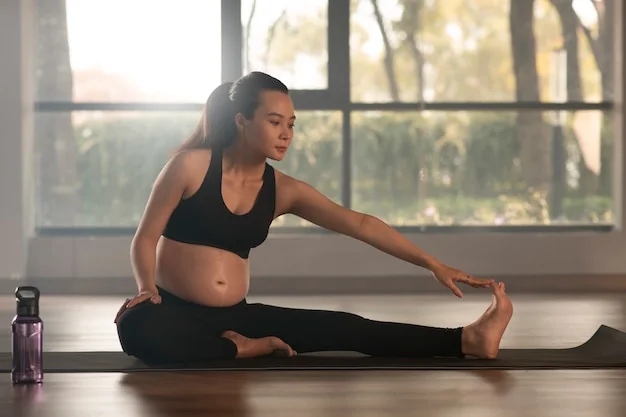
- Monday: 20-minute walk + 10 wall push-ups + 10 pelvic floor squeezes
- Wednesday: 10 sit-to-stands + 5 bird dogs per side + 10 side-lying leg lifts per side
- Friday: 25-minute walk + 10 sit-to-stands + 10 pelvic floor squeezes
- Any day you feel good: Add a few extra minutes of walking. On days you feel terrible, do the pelvic floor squeezes and call it done.
One Last Thing About "Bouncing Back"
You will see a lot of content about getting your body back after pregnancy. Ignore most of it. Your body grew a human. It will not look or feel the same, and that is not a failure.
Movement during pregnancy is about feeling better now, not about shrinking yourself. Do these exercises because they help you sleep, reduce your aches, and make daily life easier. If you miss a week, start again. If you only do the walking, that easy pregnancy exercises at home.
Talk to your midwife. Listen to your body. Keep it simple.
FAQs
Is it safe to start exercising if I did not exercise before pregnancy?
Yes, with a slow start. Begin with 10 minutes of walking and a few pelvic floor squeezes. Add a little each week. Do not jump into a hard routine. Tell your provider what you plan to do .
Can I do these exercises in the third trimester?
Most of them, yes, with adjustments. Use a chair for support during standing exercises. Skip anything on your back. Reduce the number of reps if you get tired quickly.
What if I feel a pulling sensation in my belly during exercise?
Stop the exercise and rest. A mild stretch is one thing. Sharp pain or a feeling that something is wrong is your cue to stop. If it continues after you rest, call your provider.
Do I need to eat more if I exercise?
You need about 340 extra calories per day in the second trimester and about 450 extra in the third. If you are exercising, make sure you are eating regular meals and drinking water. Do not restrict food while pregnant .
Other Articles
50 Popular Gujarati Surnames Or Last Names With Meanings