

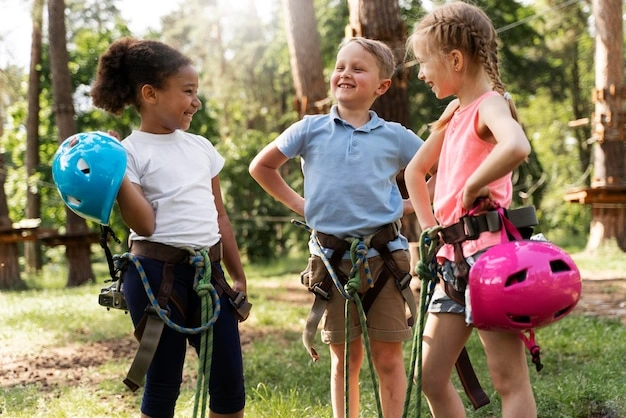
Remember those summer afternoons when children would run out of the house after lunch and not come back until the streetlights came on? When the sound of kids playing cricket in the lane, shouting and laughing, was the background music of every evening? That world has changed. Today, most kids know every YouTube cartoon but cannot name a single tree in their own neighbourhood .
The numbers tell a difficult story. On average, Indian children now spend four to six hours every day looking at screens. They spend less than one hour outdoors . This is not the fault of children. This is the world we have built around them. We have given them tablets to keep them quiet. We have let YouTube become their babysitter. We have forgotten that children need to run, fall, get up, and run again. They need to feel the sun on their skin and the grass under their feet.
This guide is for parents who want to change that. Here are outdoor activities for kids without screens that actually work for Indian families, Indian weather, and Indian parents who are already tired.
Why Children Need to Be Outdoors?
Before we talk about activities, let us understand why this matters. When children spend time outside, something changes in them. Their stress levels go down. The hormone that causes stress, cortisol, actually reduces when children are in natural environments . Their attention spans become better. Children who play outdoors can focus more in class than children who spend hours on screens .
There is also something that screens can never give children: consequence. On a screen, nothing you do affects the real world. You can restart a game. You can skip a level. But outside, actions have weight. If a child overwaters a plant, the plant shows it. If they forget to close a gate, something escapes . This teaches responsibility in a way no app ever can.
Patience is another gift of the outdoors. A screen delivers the next thing in milliseconds. A seed takes days to break the surface of the soil. A tree takes years to fruit. When children watch this process, they learn something about time. They learn that good things take time . This understanding is lost in our world of instant gratification.
Read Also: Parenting Tips For Toddlers At Home
Simple Outdoor Activities That Require No Preparation
Many parents think outdoor play requires planning, equipment, and effort. This is not true. Some of the best outdoor activities for kids without screens require nothing more than a small space and a little imagination.
The Water Bucket Game
On hot Indian summer days, water is the best thing you can give your children. You do not need a swimming pool or expensive water toys. Take a bucket, fill it with water, and give your children some mugs and old kitchen utensils. Let them pour water from one container to another. Add a drop of food colour to make it exciting. Add some soap to create bubbles . Suddenly, it becomes a science experiment. The children will play for an hour without getting bored.
Freezing Toys for a Surprise
This is a clever trick that works beautifully. Take small toys, put them in a bowl of water, and put the bowl in the freezer overnight. The next morning, give your child the frozen block and a small wooden hammer or a spoon. Their mission is to free the toys from the ice . This activity keeps children engaged for a long time. They use their hands, they think about how to break the ice, and they feel a sense of achievement when the toy comes out. Meanwhile, you can sit with your tea and watch them work.
Chalk Art on the Ground
If you have a small outdoor space, even a balcony or a terrace, buy some chalk. Let your children draw on the ground. They can make a hopscotch board. They can draw a race track for their toy cars. They can make a pretend city with roads and buildings . This is simple. It is creative. And the best part is that the rain will wash it away, so they can draw again the next day.
The Five Leaves Challenge
This activity started by accident for one mother. She asked her children to spot five different leaves during a walk. Suddenly, the walk became a mission . You can do this anywhere. Ask your children to find something red, something smooth, something rough, or something that makes a sound. This works in your society garden, in a nearby park, or even on a quiet street. It slows children down. It makes them observe their surroundings. And it keeps them engaged far longer than a regular walk would.
Evening Park Rituals
Delhi summers are harsh, as are summers in most parts of India. But those evenings from six-thirty onwards are a blessing. Make park time a daily ritual. Do not plan elaborate activities. Just go to the park with a ball or a skipping rope. Sometimes take nothing at all .
Some days the children will run. Some days they will make new friends. Some days they will just swing for an hour. This is enough. Children do not always need structured play. They need space to move, to explore, to burn energy. Parks give them exactly this without parents having to do much. Remember to carry mosquito repellent and good shoes.
What happens in parks is special. Children create their own worlds. They make rules for games. They resolve arguments. They learn to share and take turns. These are skills that screens cannot teach. The unstructured time in a park is where children learn how to be human.
Cycling: A Simple Joy
Cycling in the evening has something magical about it. Children do not see it as exercise. They see it as fun. In many Indian societies, there is a safe stretch where children cycle together. Some days it becomes a race. Some days it becomes a slow, chatty ride .
If your child is learning to cycle, even better. The sense of achievement they feel when they balance on two wheels is priceless. The excitement in their eyes is worth every extra minute you spend supervising. For slightly older children, you will notice something beautiful: they start creating their own little worlds with their friends. They ride together, talk together, and make plans together. This is social development happening naturally.
Nature Walks That Become Adventures
A simple walk can become a treasure hunt. Ask your children to find different types of leaves, spot birds, or collect stones of different colours. This turns a boring walk into an adventure . Children become observant. They start noticing things they never saw before.
You can take this further. Give your children a small notebook and a pencil. Let them draw what they see. They can make a map of the route. They can count how many birds they spot. This combines outdoor time with learning in a natural way. They do not even realise they are learning.
Small Space Activities for Apartments
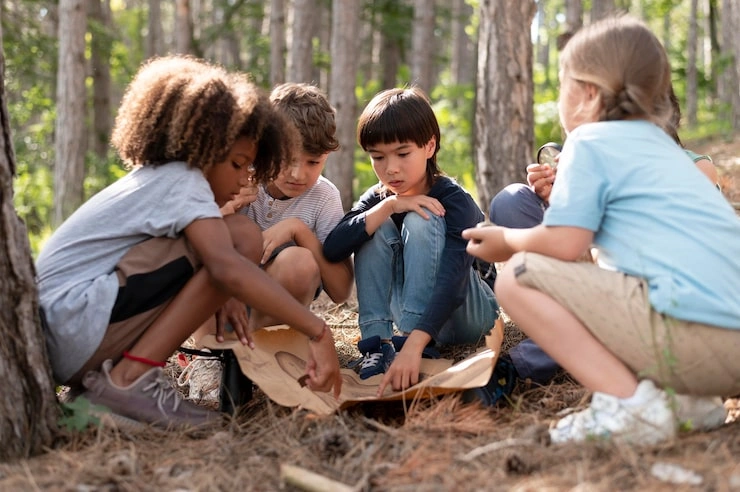
Not every family has a garden. Many Indian families live in apartments with small balconies. This does not mean outdoor activities are impossible. Even a balcony can become a play space.
Balcony Gardening
Give your children a small pot, some soil, and a seed. Let them plant it and water it every day. Watching a seed grow into a plant is a powerful experience for a child . They learn patience. They learn responsibility. They learn where food comes from. This is one of the most meaningful outdoor activities for kids without screens.
Bubble Making
Fill a bowl with water and add some soap. Give your children a wire ring or a plastic straw. Let them make bubbles on the balcony. The bubbles will float away, and the children will run after them. This is simple, joyful, and requires no expensive equipment.
Bird Watching
Keep a small bowl of water on your balcony. Birds will come to drink. Children can watch them from a distance. They can identify different birds. They can count how many come. This connects children with nature even in the middle of the city.
You May Also Like: Parenting Tips For Highly Sensitive Child
The Farm Experience
If you have the chance, take your children to a farm. This is a life-changing experience for children who have only seen nature on screens. On a farm, children do not follow a schedule. They pick up stones and soil. They touch leaves. They smell the earth. They ask questions nobody prepared them to ask .
Why does this soil look different from that soil? What is that smell? How long does it take for a mango tree to grow? Can I water this one? What happens if I plant a seed today? These questions come from being physically present in something alive and changing. The farm does not wait for the child to be ready. The farm simply exists, and the child responds instinctively .
Children who spend time on farms develop a different relationship with nature. They understand that food comes from the earth, not from a packet. They understand that animals are living beings, not characters in cartoons. This understanding stays with them for life.
Making Outdoor Time a Family Routine
The most important thing is consistency. One day of outdoor play is good. But regular outdoor time is transformative. Create a family routine. Pick one evening or one Sunday morning for outdoor fun. This could be walking, cycling, playing cricket, or just sitting in the park .
The concept of a family fitness hour works well. Make it a rule that everyone in the family goes out together. Even ten minutes of movement outdoors can change your child's mood and mental clarity . The key is to make it a habit. When it becomes a habit, it no longer requires effort.
Lead by example. Children do not follow advice. They follow examples . When parents sit on the sofa scrolling on their phones, children sit too. When parents go out and move, children move too. You cannot expect children to love the outdoors if you never step out yourself.
The Science Behind Outdoor Play
The research on children and outdoor time points in one clear direction. Children who spend time outdoors have better focus, better emotional balance, and better sleep . They are less stressed. They are more physically active. They communicate better with family members.
The science is simple. Our bodies are designed for movement. Our minds are designed for the outdoors. When we put children in rooms with screens, we go against nature. When we take them out, we let nature do its work.
Conclusion
Outdoor activities for kids without screens are not complicated. They do not require expensive equipment or elaborate planning. They require intention and consistency. They require parents to put down their own phones and step out with their children.
Start small. This week, step outside with your child for just ten minutes. Play, walk, or sit and watch the sunset together . See what happens. You will notice your child's mood improve. You will notice their energy balance. You will notice them sleeping better.
Parents often say they do not have time. But the time you spend outdoors with your children is not wasted time. It is investment in their health, their happiness, and your relationship with them. It is the time that matters most.
Other Articles

10 Month Baby Feeding Schedule
50 Popular Gujarati Surnames Or Last Names With Meanings