
Giving a bath to a newborn baby at night feels different from giving a bath in the day. The light is low. The house is quiet. The baby is often sleepy. Parents feel tired too. In India, many families give a bath to the baby in the evening or at night because elders say it helps the baby sleep better. This is true, but only if you do it the right way.
If you do not take care, night time bathing can become risky. The baby can feel too cold. Water can go into the ears. The baby can slip because you cannot see clearly. But do not worry. With the right steps, night bathing is safe and even helpful for the baby's sleep. This article gives you every small detail. No short cuts. No hard words. Just real help for Indian mothers, fathers, and safe baby bathing tips for newborns at night.
Why Night Bathing for Newborns Needs Extra Care?
During day time, you can see everything. You can check water temperature again and again. You can see if baby is shivering. But at night, your eyes are not fully fresh. The room light is dim. Sometimes you are the only person awake in the house. The baby also feels the darkness. A newborn baby cannot control body heat well. At night, the outside air becomes cooler. If you take too long for the bath, the baby loses heat fast.
Also, at night, parents are already tired from the whole day. If you have a baby less than one month old, night time tiredness can make you forget small but important things. Like checking water heat again. Or keeping a towel ready. So night bathing is not wrong. But it needs more focus and a clear step by step plan.
Read Also: How To Stop Baby Hiccups After Feeding
When Is the Right Time to Bathe a Newborn at Night?
Do not bathe the baby very late at night. The best time is between 7 PM and 8:30 PM. This is before the baby's deep sleep time. If you bathe after 9 PM, the baby may become over tired and start crying instead of sleeping. Also late night air is colder in most parts of India, especially in winter or in places like North India.
Keep the gap between feeding and bathing. If the baby just had full milk, wait for 30 minutes. If you bathe right after feeding, the baby may vomit. If you bathe when the baby is very hungry, the baby will cry all through the bath. So give a small feed, wait half hour, then do the bath. After bath, give the remaining feed. This pattern works very well for night time.
What You Must Keep Ready Before You Start the Night Bath?
Do not start the bath without keeping everything ready. Once the baby is in water, you cannot leave to get something. In night time, this is even more important because dim light makes searching for things slow and stressful. Keep these things within one arm distance:
- One big soft towel
- One small cloth for washing the baby
- Newborn nappy or cloth diaper
- Clean night suit or cotton (sleep suit)
- Baby lotion or coconut oil (if you use)
- Cotton balls for cleaning eyes and ears
- A clean cloth for drying hair
Keep all these on a bed or a chair next to the bathing area. Also keep an extra towel nearby. Many times babies pass urine as soon as you take them out of water. The extra towel saves you from running around.
Setting Up the Bathing Area for Night Time
You do not need a fancy bath tub. A clean plastic tub or a big steel basin works fine. But at night, the bathing area should feel calm and safe. Put the tub on a steady low stool or on the floor. Never keep it on a high table or chair. If baby slips, you will not be able to hold properly on a high surface.
The room should not be fully dark. Keep a small night lamp or a dim yellow light. Do not use white tube light directly over the baby. That light is harsh for newborn eyes at night. Also do not keep the room fully dark. You need to see the baby's face color. If the baby turns pale or blue due to cold, you must see it immediately.
Keep the fan at low speed or switch it off if weather is cold. In summer, keep fan away from direct air flow on baby. Direct air on wet baby makes body temperature drop fast.
Water Temperature for Newborn Night Bath
This is the most important part. Most accidents happen because water is too hot or too cold. For a newborn baby, water should feel warm on your inner wrist, not hot, not cold. The perfect temperature is between 37°C and 38°C. If you do not have a thermometer, do the elbow test. Put your elbow in water for five seconds. If it feels comfortable, it is good for the baby.
At night, because air is cooler, water can become cold faster. So fill water just before the bath. Do not fill water and keep it for half hour. Also keep one small mug of warm water extra. If the bath takes more time and water starts getting cold, you can add this warm water slowly from the side. Never pour warm water directly on baby. Mix it away from the baby's body.
In Indian winters, many families make the water very hot thinking it will stay warm longer. This is dangerous. Hot water burns newborn skin very fast. Baby skin is thin. What feels warm to your adult hand is hot for the baby. So be very careful.
Step by Step Guide to Bathe Newborn at Night
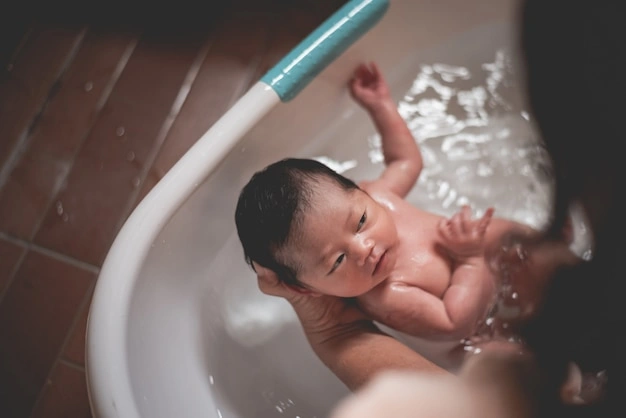
Now let us do the actual bath. Undress the baby completely. But keep a small cloth on the baby's belly. Newborns feel scared when suddenly uncovered. This cloth gives them a feeling of safety. Hold the baby with your left arm (if you are right handed). Support the baby's head and neck in the crook of your arm. Hold the baby's far arm so baby does not jump.
Slowly lower the baby's feet into water first. Do not put the whole body at once. Let the baby feel the water. Say something soft like "good baby, nice water". Your voice keeps the baby calm. After legs, slowly lower the bottom and back. Only the head should remain above water. Do not let water go above the baby's chest level.
Use your right hand to clean the baby. Start from neck folds. Then underarms. Then hands and palms. Newborns hold dirt in their palms because they keep fingers closed. Open each finger and clean gently. Then clean chest and belly. After that, lift each leg and clean the diaper area. For girls, clean front to back. For boys, clean gently around the area.
Do not use soap every day. At night, using soap is not needed. Plain warm water is enough to clean sweat and milk spills. If you use soap, use very little and wash it off fully. Soap left on skin causes rashes, especially in skin folds.
How to Wash Newborn Hair at Night Without Fear?
Many parents fear washing hair at night because they think baby will catch cold. This is not fully true. Cold is caused by virus, not by water. But losing body heat from wet head can make the baby uncomfortable. So at night, wash hair only twice a week. On other nights, just wipe head with wet cloth.
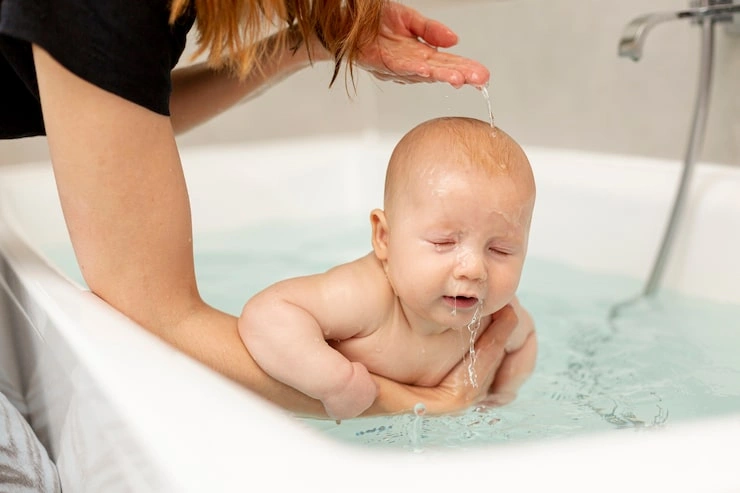
When you wash hair, tilt the baby's head slightly back. Use your hand to make a cap over the baby's forehead. This stops water from running into eyes and ears. Pour water slowly from a small mug. Do not use shower or tap directly. The sound and force of shower scares newborns at night.
Use very little baby shampoo. Not needed for newborns below one month. Just water is enough. After washing, immediately dry the head with a soft towel. Do not let the head stay wet even for one minute. In night time, a wet head makes the baby lose heat very fast.
Taking Baby Out of Water th Right Way
This step decides if the baby will sleep well or cry all night. Do not lift the baby suddenly. First, use your hand to remove extra water from baby's body. Then open the big soft towel and keep it on your lap. Lift the baby and place the baby on the towel. Immediately wrap the towel around the baby. Cover the head fully. Do not rub the skin. Rubbing makes newborns feel irritated. Just press the towel gently on skin to remove water.
Within one minute of taking out, the baby should be fully wrapped. This is very important at night because the room air feels cold to a wet body. Keep the baby wrapped for two to three minutes. Then open the towel and check if all skin folds are dry. Behind ears, neck, underarms, thighs. If any fold is wet, use a dry cloth piece to tap it dry.
You May Also Like: When To Start Tummy Time For Baby
Dressing the Baby After Night Bath
After drying, apply a thin layer of oil or lotion if you use. But do not apply too much. Excess oil blocks skin pores. In Indian summers, oil can cause heat boils. Use coconut oil or a simple newborn lotion. Do not use any adult cream or powder. Powder at night can go into baby's nose and mouth.
Put a fresh nappy or cloth diaper. Then put the night suit. Choose cotton clothes only. Do not use synthetic or thick wool directly on skin. In very cold weather, use one cotton layer inside and one thin wool layer outside. Do not over dress. If the baby sweats on the back of neck, clothes are too much.
After dressing, comb the baby's hair gently if needed. But do not use sharp combs. Only soft brush. This is also a good time to check nails. If nails are long, cut them in good light before the bath. Do not cut nails at night in dim light. You may cut the skin by mistake.
Putting the Baby to Sleep After Night Bath
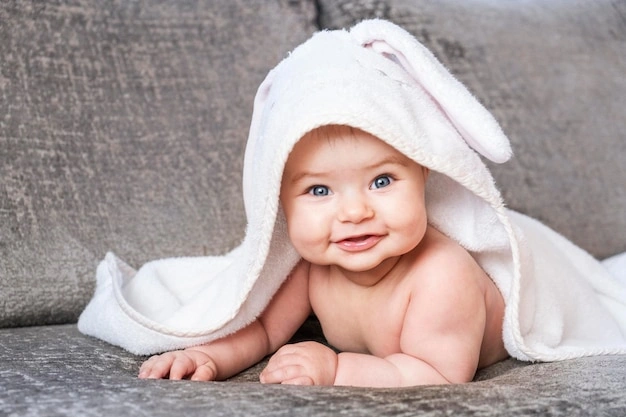
Now comes the best part. A warm bath followed by a small feed helps the baby sleep deeply. After the bath, hold the baby close to your chest. Cover the baby with a light muslin cloth. Walk slowly in the room for five minutes. Speak very softly. This is called the calming period.
Then feed the baby. Night bath makes the baby slightly tired. So the baby will feed and fall asleep faster than usual. Do not play with the baby after bath. No toys, no songs with actions, no loud sounds. Keep the room lights dim. Keep other people in the house quiet.
Once the baby finishes feeding, put the baby on the back to sleep. Never put a newborn on the stomach at night. Stomach sleeping increases risk of sudden infant death. Also keep the sleeping area empty. No pillows, no stuffed toys, no heavy blankets. A simple flat mattress with a fitted sheet is best.
Things Never to Do During Newborn Night Bath
Some mistakes happen often in Indian homes. Avoid them fully.
- Do not leave the baby alone in water even for one second. Newborns cannot lift their head. Water just two inches deep can cover the nose if baby slides. Every year, babies drown in small buckets and tubs because parents went to get something.
- Do not add hot water while baby is in the tub. Always mix water away from baby. Test temperature again after mixing.
- Do not use your phone during bath. Even one glance at phone takes your eyes off the baby.
- Do not let older siblings help during night bath. Even older kids cannot judge water temperature or baby's safety correctly.
- Do not bathe if the baby has fever. Warm water can raise body temperature more. Also do not bathe if baby is crying very hard. Calm the baby first. A scared baby at night takes very long to go back to sleep.
- Do not use strong soaps or detergents to clean the tub. Simple water and mild soap is enough. Strong chemical smell stays in tub and goes into baby's skin.
Special Tips for Indian Winter Nights
Winter nights in North India are very cold. In places like Delhi, Punjab, Uttar Pradesh, the temperature drops below 10°C. In such weather, night bathing needs extra steps. First, close all windows and doors of the bathroom. Keep the room warm without using a heater directly on baby. If you use a room heater, keep it at a distance. Direct heat dries baby skin.
Warm the baby's clothes and towel before bath. You can keep them under your own blanket or use a low setting on a heater for five minutes. A cold towel on warm wet skin makes the baby shiver. Also keep the post bath area warm. Do not take the baby from warm bathroom to a cold bedroom. The sudden change is bad for safe baby bathing tips for newborns at night.
In extreme cold, you can skip night bath completely. Sponge bath is enough. Take a soft cloth dipped in warm water. Wipe the baby's face, neck, hands, diaper area, and feet. Do not open the whole body at once. Clean one part, dry it, cover it, then move to next part. This keeps the baby warm.
How to Know Baby Is Comfortable During Night Bath?
You do not need any machine to check. Just look at the baby. A comfortable baby stays calm. Fingers and toes look pink, not blue or white. Baby does not shiver. Baby's lips look red, not purple. Baby makes soft cooing sounds or stays quiet. A scared or cold baby will cry hard, make fists, and push the body stiff.
If baby shivers even once, take the baby out immediately. Do not continue thinking it will get better. Wrap the baby in a dry towel. Warm the room more. Try again next time. One lost bath is fine. One sick baby is not.
Frequently Asked Questions
Can I bathe my one month old baby at 10 PM?
It is better not to. Baby's natural sleep cycle starts around 8 PM to 9 PM. Bathing after that disturbs the cycle. The baby may become active instead of sleepy. Try to finish bath by 8:30 PM.
What if baby passes stool during night bath?
It is normal. Newborns pass stool suddenly. Lift the baby out carefully. Drain the water. Clean the tub. Fill fresh warm water. Continue bath. Do not wash the baby in dirty water. That can cause infection.
Is it safe to use a baby bath seat at night?
No. Bath seats give false confidence. Babies slip from seats. Also at night, you cannot see the seat grip properly. Your own arm is the safest seat.
How long should the night bath be?
Five minutes maximum. Longer than five minutes makes the baby lose heat. Newborns do not get very dirty. Five minutes is enough for cleaning.
My baby cries every time I give a night bath. What to do?
Check water temperature first. Most likely it is too cold or too hot. Also check room temperature. If room is too cold, baby feels shock when clothes open. Keep room warm. Also make sure you are not rushing. Hold the baby close before putting in water. Speak softly. If still crying, skip bath for two days. Then try again.
Conclusion
You are doing a good job. Caring for a newborn at night is hard. You are tired. You are learning. That is okay. You do not need to give a perfect bath every night. Some nights, just a wipe with warm cloth is enough. Some nights, the baby will cry. Some nights, you will forget to keep the towel ready. Do not feel bad. What matters is safety, not perfection.
Keep the steps simple. Keep the water warm, not hot. Keep the baby wrapped after bath. Keep the room calm. And most of all, keep yourself calm. A relaxed parent makes a relaxed baby. Your baby feels your hands. If your hands are gentle and sure, the baby will learn to enjoy night bath. And that night bath will become a beautiful quiet time between you and your baby. Not a fight. Not a fear. Just love.
Other Articles

50 Popular Gujarati Surnames Or Last Names With Meanings